Chipotle Mexican Grill Nutrition Facts 2026: Calories, Protein, Carbs & Sodium Chart
Use this Chipotle nutrition facts page when you want a fast menu chart instead of building a full custom order. It summarizes calories, protein, carbs, fat, sodium and fiber for the core Chipotle Mexican Grill ingredients, then shows how those numbers change in bowls, burritos, tacos and salads.
For a precise custom total, use the Chipotle nutrition calculator. For a quick lookup, scan the tables below and compare ingredients before you order.
Quick Nutrition Takeaways
- Highest protein: chicken, with about 32g protein per standard serving.
- Biggest calorie jump: burrito tortilla, chips, guacamole and queso.
- Lowest carb base: salad greens or bowl without rice, beans or tortilla.
- Sodium watch: salsa, sofritas, barbacoa, tortillas and vinaigrette can add up quickly.
How to Read Chipotle Nutrition Information
Most people searching for Chipotle Mexican Grill nutrition are trying to answer one of three questions: how many calories are in a normal order, which ingredients fit a macro goal, or which items should be limited for sodium, carbs or fat. A static nutrition chart is useful for the first scan, but the final total depends on your exact build.
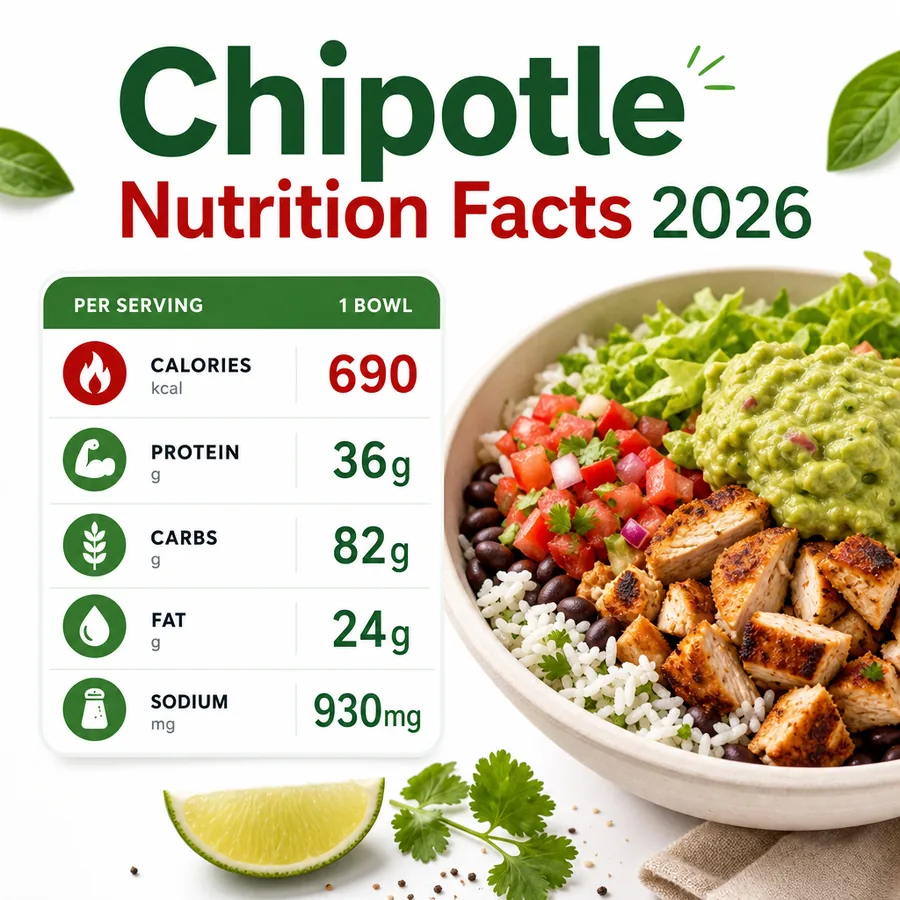
Chipotle's official nutrition materials explain that serving sizes are approximations and nutrition can vary because of portion size, recipes, seasonal ingredients and ingredient sources. That means the numbers below should be treated as planning estimates, not lab-perfect totals for every restaurant visit. The practical move is to use the chart to choose ingredients, then use the calculator for the final meal total.
Chipotle Nutrition Facts Chart by Ingredient
This chart focuses on the numbers most users compare before ordering: calories, protein, carbs, fat, sodium and fiber. It is intentionally grouped by ordering step so you can move through it the same way you build a bowl, burrito, salad or tacos.
| Ingredient | Portion | Calories | Protein | Carbs | Fat | Sodium | Fiber |
|---|---|---|---|---|---|---|---|
| Flour Tortilla (burrito) | 1 ea | 320 | 8g | 50g | 9g | 600mg | 3g |
| Cilantro-Lime Brown Rice | 4 oz | 210 | 4g | 36g | 6g | 190mg | 2g |
| Cilantro-Lime White Rice | 4 oz | 210 | 4g | 40g | 4g | 350mg | 1g |
| Black Beans | 4 oz | 130 | 8g | 22g | 1.5g | 210mg | 7g |
| Pinto Beans | 4 oz | 130 | 8g | 21g | 1.5g | 210mg | 8g |
| Fajita Vegetables | 2 oz | 20 | 1g | 5g | 0g | 150mg | 1g |
| Chicken | 4 oz | 180 | 32g | 0g | 7g | 310mg | 0g |
| Steak | 4 oz | 150 | 21g | 1g | 6g | 330mg | 1g |
| Barbacoa | 4 oz | 170 | 24g | 2g | 7g | 530mg | 1g |
| Carnitas | 4 oz | 210 | 23g | 0g | 12g | 450mg | 0g |
| Sofritas | 4 oz | 150 | 8g | 9g | 10g | 560mg | 3g |
| Fresh Tomato Salsa | 4 oz | 25 | 0g | 4g | 0g | 550mg | 1g |
| Roasted Chili-Corn Salsa | 4 oz | 80 | 3g | 16g | 1.5g | 330mg | 3g |
| Tomatillo-Green Chili Salsa | 2 fl oz | 15 | 0g | 4g | 0g | 260mg | 0g |
| Tomatillo-Red Chili Salsa | 2 fl oz | 30 | 0g | 4g | 0g | 500mg | 1g |
| Cheese | 1 oz | 110 | 6g | 1g | 8g | 190mg | 0g |
| Sour Cream | 2 oz | 110 | 2g | 2g | 9g | 30mg | 0g |
| Guacamole | 4 oz | 230 | 2g | 8g | 22g | 370mg | 6g |
| Queso Blanco | 2 oz | 120 | 5g | 4g | 9g | 250mg | 0g |
| Supergreens Salad Mix | 3 oz | 15 | 1g | 3g | 0g | 15mg | 2g |
| Chips (regular) | 4 oz | 540 | 7g | 73g | 25g | 390mg | 7g |
| Chipotle-Honey Vinaigrette | 2 fl oz | 220 | 1g | 18g | 16g | 850mg | 1g |
What the chart means in real ordering decisions
The easiest calorie reduction is usually choosing a bowl or salad instead of a burrito, because the burrito tortilla alone adds 320 calories and 50g carbs. The easiest protein boost is choosing chicken or double chicken. The most common sodium surprises are fresh tomato salsa, tomatillo-red chili salsa, sofritas, barbacoa and chipotle-honey vinaigrette.
Chipotle Menu Nutrition Ranges
Menu-level ranges are helpful when you are comparing formats before selecting ingredients. A burrito, bowl and salad can all use similar fillings, but the tortilla, greens, vinaigrette and portion choices change the final calorie and macro profile.
Burrito Bowl
Typical range: 420-910 calories.
Best when you want the full Chipotle flavor profile without tortilla calories.
Burrito
Typical range: 740-1210 calories.
Best for higher calorie needs, but the tortilla adds carbs and sodium.
Salad
Typical range: 420-910 calories.
Best for lower-carb builds, especially when vinaigrette is used lightly.
Tacos
Typical range: 390-1140 calories.
Best for portion control, but tortilla count and toppings matter.
Common Chipotle Orders: Calories and Macros
| Example Order | Estimated Calories | Best For | What to Watch |
|---|---|---|---|
| Chicken bowl with brown rice, black beans, fresh tomato salsa and lettuce | About 560 calories | Balanced protein and fiber | Sodium from salsa and protein |
| Steak salad with fajita vegetables, cheese, guacamole and light salsa | About 525 calories | Lower-carb meal planning | Fat from cheese and guacamole |
| Burrito with white rice, pinto beans, chicken, cheese and sour cream | About 1060 calories | Higher calorie needs | Tortilla carbs plus dairy fat |
| Sofritas bowl with brown rice, black beans, corn salsa and guacamole | About 800 calories | Plant-based ordering | Sodium and fat can climb quickly |
These examples are not official combo meals; they are practical estimates built from individual ingredient values. If you add double protein, queso, chips, a large drink or extra guacamole, your final calories and sodium can move far outside the simple menu range.
Fast Nutrition Rankings: Protein, Sodium, Carbs and Calories
Rankings are useful when you do not want to scan the entire Chipotle nutrition facts chart. These shortcuts are based on standard ingredient portions and are meant for quick meal planning before you use a calculator.
Best protein-to-calorie choices
- Chicken: about 32g protein for 180 calories.
- Steak: about 21g protein for 150 calories.
- Barbacoa: about 24g protein for 170 calories.
- Beans: about 8g protein plus fiber, but also adds carbs.
Items that raise sodium quickly
- Chipotle-honey vinaigrette: about 850mg sodium.
- Burrito tortilla: about 600mg sodium.
- Sofritas, barbacoa and red salsa can each add 500mg or more.
- Multiple salsas can push a bowl above a low-sodium target.
Lower-carb ordering moves
- Choose salad greens or a bowl without tortilla.
- Skip rice, beans, corn salsa and chips when carbs are strict.
- Use fajita vegetables, lettuce, cheese, sour cream and guacamole for volume and fat.
- Check net carbs if you are following keto rather than general low-carb eating.
Highest calorie add-ons
- Chips: about 540 calories before dips.
- Burrito tortilla: about 320 calories.
- Guacamole: about 230 calories.
- Queso blanco, cheese and sour cream add calories faster than salsa or lettuce.
When the Nutrition Facts May Not Match Your Bowl Exactly
The largest real-world gap is portion variability. A generous scoop of rice, an extra-heavy spoon of guacamole or a double portion that is not perfectly measured can change calories and sodium. This is why nutrition labels and restaurant calculators are best used as estimates for planning, not exact measurements of a specific plate.
For health decisions that require stricter limits, the FDA nutrition facts label guide is useful for reading calories, sodium, fat and serving sizes consistently. For general daily nutrient context, the Dietary Guidelines for Americans provide broader eating pattern recommendations. Those sources do not replace Chipotle's ingredient data, but they help interpret what the numbers mean.
Best Choices by Nutrition Goal
For high protein
Start with chicken, steak or barbacoa, then add beans if carbs fit your target. Chicken is the most efficient standard protein choice because it provides about 32g protein for 180 calories. For muscle-gain meals, use the balanced macro bowl guide to keep protein high without losing control of calories.
For lower calories
Choose a bowl or salad, skip the burrito tortilla, and treat guacamole, queso, sour cream and chips as calorie-dense extras. A lean build can still include rice or beans, but adding both plus high-fat toppings changes the meal quickly.
For lower carbs
Use salad greens as the base and limit rice, beans, corn salsa, chips and tortillas. This is where a Chipotle lifestyle bowl can be useful, because keto-style and Whole30-style builds are already structured around common dietary constraints.
For lower sodium
Watch salsa portions, sofritas, barbacoa, tortillas and vinaigrette. Sodium is the nutrient most people underestimate at Chipotle because several ingredients look light but carry a high sodium load. Compare the chart before stacking multiple salty components.
Official PDF vs Nutrition Calculator: Which Should You Use?
A Chipotle nutrition PDF is best when you want to compare many ingredients at once. It is fast, printable and easy to scan. The limitation is that a PDF does not calculate your exact order, especially when you add extra portions or combine many toppings.
A calculator is better when you already know your order and need a total. For example, a chicken bowl with brown rice, black beans, corn salsa and guacamole is not one line on a menu chart; it is the sum of five separate ingredient choices. That is why this page links to the Chipotle bowl calculator, Chipotle burrito calculator and the main nutrition calculator after the chart.
The best workflow is simple: scan this page for ingredient tradeoffs, build your meal in the calculator, then adjust one or two ingredients if calories, carbs, sodium or fat are higher than expected.
Chipotle Nutrition Facts FAQ
Calculate Your Exact Chipotle Order
Use the chart to compare ingredients, then build your custom order to see total calories, protein, carbs, fat, sodium and fiber.